- 1
- 0
- 0
- 0
- 0


The End of Business as Usual
The global business environment has entered a state of what scholars now term a "permacrisis"—a prolonged period of instability where economic shocks, geopolitical tensions, technological disruption, and climate pressures converge . The post-COVID-19 world has rendered traditional management paradigms, rooted in 20th-century industrial thinking, increasingly obsolete . In this new landscape, success demands more than efficiency or scale—it requires agility: the capacity to anticipate, adapt, and thrive amid uncertainty.
The global business environment has entered a state of what scholars now term a "permacrisis"—a prolonged period of instability where economic shocks, geopolitical tensions, technological disruption, and climate pressures converge . The post-COVID-19 world has rendered traditional management paradigms, rooted in 20th-century industrial thinking, increasingly obsolete . In this new landscape, success demands more than efficiency or scale—it requires agility: the capacity to anticipate, adapt, and thrive amid uncertainty.
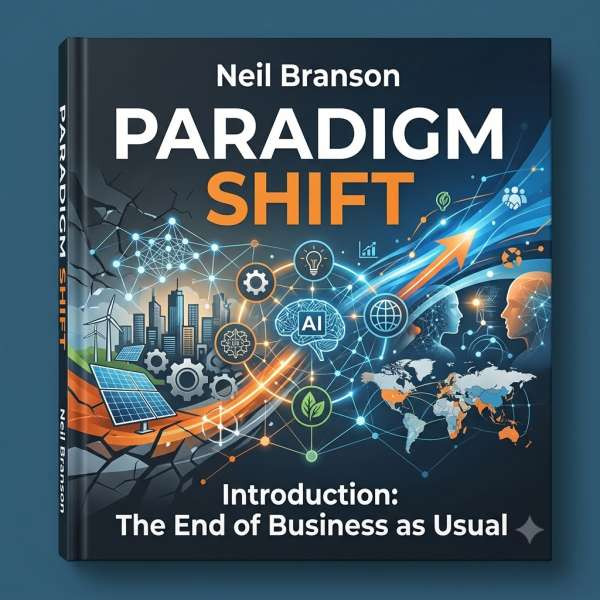
Introduction: The End of Business as Usual
The global business environment has entered a state of what scholars now term a "permacrisis"—a prolonged period of instability where economic shocks, geopolitical tensions, technological disruption, and climate pressures converge . The post-COVID-19 world has rendered traditional management paradigms, rooted in 20th-century industrial thinking, increasingly obsolete . In this new landscape, success demands more than efficiency or scale—it requires agility: the capacity to anticipate, adapt, and thrive amid uncertainty.
This book explores the key trends reshaping strategy and management in the 2020s: the AI revolution, the sustainability imperative, digital transformation, and the paradox of globalization and deglobalization . Drawing on interdisciplinary research—from evolutionary theory to computer science—it argues that sustainable prosperity is achievable through a values-driven, human-centred approach to innovation .
Chapter 1: From VUCA to Perma crisis – Understanding the New Normal
For years, business leaders navigated a "VUCA" world—volatile, uncertain, complex, and ambiguous. But the scale and interconnectedness of today's crises demand a new framework . This chapter traces the transition from isolated disruptions to a state of perma crisis, where multiple challenges—climate change, supply chain fragility, geopolitical conflict, and technological upheaval—coexist and amplify each other.
It argues that outdated economic models, which prioritise short-term shareholder value over systemic resilience, are no longer fit for purpose. The chapter introduces the Future Management paradigm as a pathway out of crisis, emphasizing regenerative mindsets, stakeholder value co-creation, and mindful technology adoption .
Chapter 2: The Digital Transformation Imperative
Digital technology has fundamentally altered the rules of competition. Yet many organizations treat digitalization as a technical upgrade rather than a strategic reinvention. This chapter examines how companies can embed digital technologies—AI, big data, and platforms—into their core business models .
Drawing on case studies from Amazon, Airbnb, and others, it explores the shift from traditional pipelines to platform-based, multi-sided architectures that create value through network effects . It also addresses the challenges of this transition: high implementation costs, organizational resistance, and the need for new capabilities .
Chapter 3: AI as Strategic Partner – Beyond the Hype
Artificial intelligence is not merely an efficiency tool; it is reshaping the very logic of strategy. From predictive analytics to generative AI, this chapter explores how firms can move beyond experimentation to embed AI into decision-making, innovation, and value creation .
It examines the Moore's Law in AI—the rapid acceleration of computational power—and its implications for competitive advantage . However, it also warns against uncritical adoption, highlighting the ethical risks: bias, accountability, privacy, and the erosion of human judgment . The chapter proposes a human-centric approach where AI augments rather than replaces human capabilities.
Chapter 4: Sustainability as Strategy – From Compliance to Competitive Advantage
Sustainability is no longer optional—it is a strategic necessity . This chapter argues that environmental and social responsibility can be a source of differentiation, innovation, and long-term value creation. It moves beyond the rhetoric of "doing good" to explore how firms can integrate sustainability into their business models.
It introduces the concept of sustainable innovation, where enterprises balance environmental protection with competitiveness through internal management changes and external stakeholder engagement . The chapter also examines the role of transformative value—value that is equitable, collective, and enhances quality of life without disadvantaging others .
Chapter 5: The Digital Multinational – Navigating Globalization and Deglobalization
Multinational corporations face a paradox: digital technology has accelerated globalization, enabling borderless markets and global value chains. Yet simultaneously, a resurgence of nationalism and protectionism has revived barriers, from trade wars to data sovereignty laws .
This chapter introduces the framework of tight and loose coupling to characterize how multinationals should manage relationships with global partners and subsidiaries . Drawing on real-world examples—Burberry's entry into China, Unilever's AI-powered talent marketplace—it provides a typology of global business contexts and digital strategies for market entry, platform management, and innovation .
Chapter 6: Strategic Agility – Designing Organizations That Adapt
In a world where instability is the norm, strategic agility is essential for survival . This chapter explores how organizations can move from rigid, hierarchical structures to agile, responsive designs. It examines principles from Toyota's lean production system, Netflix's experimentation culture, and IKEA's supply chain resilience.
The chapter introduces frameworks like BANI (Brittle, Anxious, Nonlinear, Incomprehensible) and AI-driven predictive analytics to help firms shift from reactive to proactive decision-making . It also addresses the "agility trap"—the risk of constant change without strategic coherence—and proposes how companies can balance flexibility with long-term purpose .
Chapter 7: Value and Values – The Human Dimension
Ultimately, strategy is not just about markets and technology—it is about people. This chapter challenges the conventional wisdom that profit maximization is the sole purpose of enterprise. Drawing on ancient Greek concepts of métron (moderation) and eudaimonia (flourishing), it argues for a values-driven approach to management .
It introduces the concept of purpose-driven strategy, where organizations align their actions with stakeholder values to build trust and loyalty . Through case studies of Patagonia, Alibaba, and others, it shows how companies can achieve sustainable prosperity by balancing economic performance with ethical responsibility and social impact .
Conclusion: The Future Is Already Present
The challenges of the 21st century are unprecedented, but so are the opportunities. Organizations that embrace agility, digitalization, sustainability, and a human-centred approach will not only survive but thrive. This book concludes with a call to action for leaders to regenerate their mindsets, rethink their strategies, and build enterprises that create lasting value for all stakeholders .
As one expert observes, the value of a business book is not in its sales, but in how it helps you attract opportunities, build authority, and shape the future . In an age of disruption, the most important investment you can make is in your own adaptability and vision.
Nedavno slušano od


Nema komentara
Više pjesama