
- 2
- 0
- 0
- 0
- 0


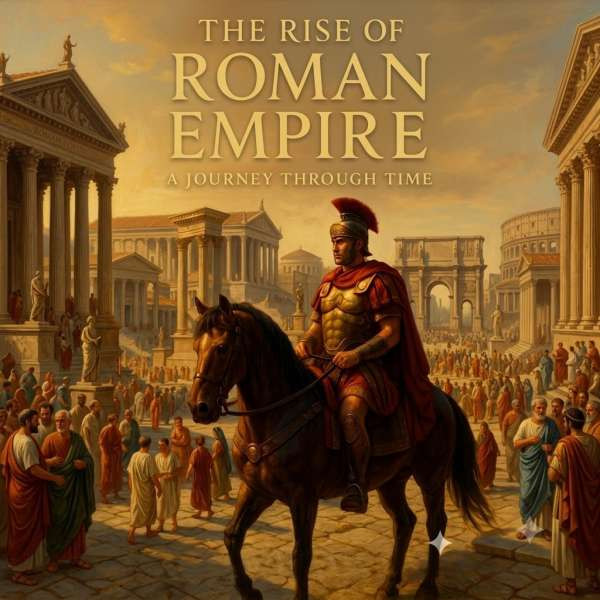
The Rise of the Roman Empire: A Journey Through Time
Explore Key Events, Influences & Cultural Achievements
Explore Key Events, Influences & Cultural Achievements
The Rise of the Roman Empire: A Journey Through Time
Chapter 1
From Humble Beginnings: The Foundation of Rome
Chapter 1: From Humble Beginnings: The Foundation of Rome
In the heart of Italy, among the rolling hills and broad plains, lay a small settlement that would grow to become one of history's most powerful civilizations. The origins of Rome are shrouded in myth, legend, and a rich tapestry of archaeological evidence. To truly appreciate the rise of this illustrious city, we must journey back to its beginnings a time when the divine and the mundane intertwined, laying the foundations of a society that would shape the future of the Western world.
The Legendary Birth of Rome
The Myth of Romulus and Remus
At the core of Roman mythology is the tale of Romulus and Remus, twin brothers said to be the sons of the god Mars and the vestal virgin Rhea Silvia. According to legend, they were abandoned at birth and left to die by the banks of the Tiber River. However, fate intervened as a she-wolf discovered the infants and suckled them, nurturing them until they were found by a shepherd named Faustulus.
This myth encapsulates the values of courage, survival, and a deep connection to the divine qualities that Romans would come to cherish. Romulus and Remus, embodying the fierce spirit of the Roman people, eventually reclaimed their birthright. The twins decided to establish a city, but a fateful dispute over its location led Romulus to slay his brother, marking the foundation of Rome in 753 BCE.
This story serves not only as a thrilling narrative but also as a reflection of early Roman society. The fraternal conflict highlights the struggles inherent in leadership and governance. Romulus s ultimate triumph can be interpreted as a metaphor for the harsh realities of power, a theme prevalent throughout Roman history. The act of fratricide is particularly poignant, symbolizing the sacrifices often demanded in the pursuit of greatness.
Reflections of Early Roman Values
The myth of Romulus and Remus reveals much about the values that defined early Roman society. Themes of valor, sacrifice, and the significance of lineage were paramount. Romans revered strength and resilience, qualities embodied by Romulus, who became the first king of Rome. His character was not just born of divine parentage but also shaped by his journey from obscurity to power.
The story of the twins also emphasizes the importance of the family unit and the deep-seated belief that divine favor could be attained through noble actions. In this regard, the myth fosters a sense of unity among the Roman people, as they viewed themselves as descendants of heroic figures chosen by the gods to establish a great civilization.
The Geographical Advantages of Rome
While the mythological tales are captivating, the physical landscape of Rome played an equally crucial role in its development. Strategically located on the Tiber River, Rome enjoyed several geographical advantages that facilitated trade, agriculture, and defense. The river served as a vital artery for commerce, connecting the burgeoning city to the Mediterranean and beyond.
The Seven Hills of Rome
Rome's iconic seven hills Palatine, Aventine, Capitoline, Quirinal, Viminal, Esquiline, and Caelian formed a natural fortification that offered protection against invaders. Each hill held its significance, both mythologically and politically. The Palatine Hill, in particular, was believed to be the birthplace of Romulus and became a symbol of power as the site of imperial palaces.
Moreover, the surrounding fertile plains were pivotal for agriculture. The Latium region, particularly rich in resources, allowed early Romans to cultivate grains and raise livestock. This agricultural surplus not only sustained the population but also provided the economic foundation necessary for the city s expansion and eventual dominance.
The Influence of Neighboring Civilizations
In the crucible of early Roman society, the influence of neighboring civilizations was profound. The Etruscans, who inhabited the region north of Rome, played a significant role in shaping the early development of the city. Their advanced culture, with its sophisticated architecture and urban planning, left an indelible mark on Roman society.
Etruscan Contributions
The Etruscans introduced the Romans to various elements of civilization writing systems, religious practices, and political organization. Their use of arches and vaults in construction set the stage for Rome's architectural innovations. The grandeur of the Etruscan cities inspired the Romans to envision their capital as a powerful and beautiful metropolis.
Moreover, the Etruscan kings who ruled Rome during its early years exemplified the blend of cultural influences. Tarquin the Proud, one of the last Etruscan kings, was a controversial figure whose reign highlighted the tension between monarchy and the emerging republican ideals. His eventual overthrow marked a turning point in Roman history, leading to the establishment of the Roman Republic. This shift is significant, as it laid the groundwork for a political system that valued civic participation and the rule of law principles that would resonate throughout Roman history.
The Impact of the Greeks
In addition to the Etruscans, the Greeks profoundly influenced Roman culture. As trade routes expanded, the Romans encountered Greek art, philosophy, and literature. The adoption of the Greek pantheon of gods and goddesses, albeit with new names, demonstrated the Romans' willingness to integrate foreign elements into their own cultural framework.
The blending of Greek and Roman traditions fostered a rich intellectual environment. Writers such as Virgil and Ovid drew inspiration from Greek mythology, weaving tales that echoed the foundational myths of Rome. This cultural synergy enriched the Roman identity, celebrating both military might and artistic achievement.
The Establishment of the Roman Kingdom
The establishment of the Roman Kingdom marked a turning point in the city's evolution. Following the legendary founding in 753 BCE, Romulus became the first king, setting a precedent for the leaders who would follow. The monarchy in Rome would not last forever, but it was crucial in laying the groundwork for a society that valued law, citizenship, and civic duty.
The Role of the Senate
One of the critical institutions to emerge during this period was the Senate. Initially composed of Romulus's advisors, it grew in importance and influence, symbolizing a nascent form of governance. This advisory council represented the elite of Roman society, setting the stage for the political institutions that would shape the Republic and later the Empire.
The Transition to the Republic
The monarchy gave way to the Republic in 509 BCE, following the expulsion of Tarquin the Proud. This shift marked a significant change in Roman governance, emphasizing the power of the people and the importance of civic responsibility. The early Republic was characterized by a struggle between the patricians and plebeians, which shaped the political landscape for generations.
The ideals of representative government and legal equality, forged in the fires of conflict, would become cornerstones of Roman identity. This evolution from monarchy to republic exemplifies the desire for balance in governance and the belief that power should be derived from the consent of the governed an idea that resonates through the annals of history.
Conclusion
The foundations of Rome are a rich tapestry woven from mythology, geography, and cultural exchange. The legendary tales of Romulus and Remus resonate with the virtues that defined early Roman society: courage, sacrifice, and a deep connection to the divine. These narratives laid the groundwork for a civilization that would rise from humble beginnings to dominate the ancient world.
The geographical advantages of Rome, coupled with the influence of neighboring civilizations, facilitated its growth into a powerful city-state. The early monarchy, though brief, established key institutions that would endure through the centuries, ultimately giving rise to the Republic and shaping the future of governance.
As we embark on this journey through time, exploring the rise of the Roman Empire, we begin to understand that the city s humble beginnings were not merely a backdrop for greatness; they were the very foundation upon which the monumental achievements of Rome would be built. The echoes of these early myths and realities continue to resonate, inviting us to reflect on the values that shaped one of history s most enduring legacies.
Chapter 2
The Republic Emerges: A New Political Order
Chapter 2: The Republic Emerges: A New Political Order
The sun dipped low over the Seven Hills of Rome, casting long shadows across the bustling Forum. Merchants shouted their wares, while citizens engaged in heated discussions about the affairs of the city. But beneath this vibrant facade lay a society on the cusp of transformation, a transition from the age of kings to a revolutionary new political order: the Roman Republic. This chapter delves into the seismic shift that marked the dawn of this republic, exploring the innovative political structures that emerged, the establishment of the Senate, the role of popular assemblies, and the ongoing struggle between patricians and plebeians.
The Birth of the Roman Republic
The fall of the monarchy in Rome was as dramatic as it was significant. The last king, Tarquin the Proud, ruled with an iron fist, his tyranny spurring a revolt among the Roman people. Led by Lucius Junius Brutus, a nobleman with a personal vendetta against the king, the revolt culminated in the expulsion of Tarquin in 509 BCE. The end of the monarchy was a clarion call for change; it would give rise to a new political landscape that aimed to prevent any individual from wielding unchecked power.
From Monarchy to Republican Ideals
With the monarchy's collapse, the fledgling Romans sought to create a government grounded in the principles of shared power and civic engagement. In place of a king, they established two consuls, elected officials who would hold executive authority for one-year terms. This innovative structure not only limited the concentration of power but also introduced a system of checks and balances a cornerstone of republican governance that would resonate throughout history.
The consuls, chosen from the ranks of patricians, commanded the Roman military and presided over the Senate, but they were not without limitations. Each consul could veto the other's decisions, ensuring that no single official could dominate the political sphere. This biannual election cycle was a radical departure from the hereditary rule that characterized the monarchy, reflecting a growing belief among the Romans that sovereignty lay with the people.
The Role of the Senate
As the Republic matured, the Senate emerged as a pivotal institution, shaping the trajectory of Roman governance. Initially composed of 300 patrician members, the Senate wielded considerable influence over both domestic and foreign policy. Senators served for life, allowing for continuity and experience within the legislative body. This structure allowed the Senate to act as a stabilizing force in a rapidly evolving political landscape.
Legislative Authority
The Senate possessed the power to propose legislation, advise consuls, and manage state finances. Though its decrees (known as senatus consulta) were not legally binding, they carried significant weight in Roman political culture. The respect commanded by the Senate meant that its recommendations often became law, creating a de facto legislative authority that guided the Republic's policy decisions.
Moreover, the Senate played a crucial role in foreign affairs, overseeing treaties and declaring wars. It acted as a bastion of traditional Roman values and interests, often resisting legislative changes that threatened the status quo. Senators were expected to act in the best interests of Rome, but their decisions were frequently influenced by personal ambitions, rivalries, and the intricate webs of loyalty that characterized Roman society.
The Growth of the Senate's Power
Over time, the Senate's authority expanded, particularly during times of crisis. In moments of war or civil unrest, consuls would often rely heavily on the Senate's counsel, effectively consolidating power in its hands. This trend raised concerns among the plebeian class, who began to feel increasingly marginalized. The Senate, primarily composed of elite patricians, often prioritized the interests of the upper class over the needs of the common people.
Popular Assemblies: A Voice for the People
As the Republic progressed, the growing discontent among the plebeians the common citizens of Rome led to the establishment of popular assemblies. These assemblies became crucial in allowing the voice of the populace to be heard, creating a counterbalance to the power of the Senate and the consuls.
The Centuriate Assembly
The Centuriate Assembly was one of the earliest manifestations of this democratic spirit. Organized based on wealth and military service, the assembly divided citizens into centuries, which were groups that voted on matters such as legislation and the election of consuls. While the assembly initially favored the patricians, as time went on, it evolved into a more inclusive body, gradually allowing greater participation from the plebeians.
The Tribal Assembly
In addition to the Centuriate Assembly, the Tribal Assembly emerged as a more egalitarian platform for voting. Organized by tribes rather than wealth, this assembly provided an avenue for the plebeians to elect their own representatives, known as tribunes. The tribunes held the power to veto legislation and protect the rights of the common people, marking a significant step toward representing the broader population in the political arena.
The Conflict of the Orders
Despite these advances, the struggle between patricians and plebeians, known as the Conflict of the Orders, persisted. The patricians, rooted in their long-established noble lineage, sought to maintain their dominance in political affairs, while the plebeians gradually demanded equal rights and protections under the law. This struggle culminated in a series of social reforms that transformed the political landscape of the Republic.
The Twelve Tables: A Milestone in Legal Reform
One of the most significant outcomes of the plebeian struggle was the creation of the Twelve Tables around 450 BCE. This codification of Roman law marked a turning point in the Republic, as it provided a written legal framework accessible to all citizens, not just the elite. The laws outlined fundamental rights and procedures, establishing principles of justice that would resonate through the ages.
Legal Equality
The Twelve Tables helped to mitigate some of the class disparities that had characterized Roman society. By establishing clear legal standards, the tables ensured that all citizens were subject to the same laws, a radical notion at the time. This shift toward legal equality laid the groundwork for future legal systems, emphasizing the importance of governance rooted in the rule of law rather than the whims of the powerful.
The Significance of Political Innovations
The political innovations of the Roman Republic were profound and far-reaching. The establishment of consuls, the Senate, and popular assemblies represented a departure from tyranny and an embrace of collective governance. These structures, while imperfect, laid the groundwork for a political philosophy that would influence future civilizations.
Legacy of the Roman Republic
The Republic's commitment to a mixed government combining elements of democracy, aristocracy, and monarchy provided a blueprint for later political thinkers. The debates over power distribution, representation, and the role of the citizen continue to resonate in contemporary governance. The Roman Republic's innovations demonstrated that political authority could be distributed among multiple bodies, fostering greater accountability and reducing the risk of despotism.
Lessons for Future Generations
The ongoing conflict between patricians and plebeians highlights the essential nature of civic engagement in any political system. The struggles for representation, rights, and social justice experienced by the Roman populace serve as a reminder that the fight for equality is a continuous journey. The lessons learned from the Roman Republic can inspire modern citizens to advocate for their own rights, ensuring that governance remains reflective of the will of the people.
Conclusion: A New Dawn
The emergence of the Roman Republic marked a watershed moment in history, characterized by significant political innovations and social upheaval. The establishment of the Senate, the creation of popular assemblies, and the struggles between social classes set the stage for a new political order defined by shared power and civic participation. As Romans grappled with the complexities of governance, they laid the foundation for a republic that would endure through centuries, influencing not only their world but also the future of governance itself.
As we continue this journey through the rise of the Roman Empire, we shall witness the evolution of these political structures and their implications for a rapidly expanding empire, illuminating the intricate tapestry of power, conflict, and human ambition that defined ancient Rome.
Chapter 3
Conquests and Expansion: The Road to Dominance
Chapter 3: Conquests and Expansion: The Road to Dominance
The echo of clashing swords, the roar of triumphant legions, and the blood-soaked earth beneath the feet of soldiers: these visceral images encapsulate a decisive period in human history. The Roman Empire, a name that reverberates through the annals of time, would not be the colossal force it became without a series of strategic military campaigns that expanded its territory, influence, and power. This chapter will explore the road to Rome's dominance, focusing on the unification of Italy and the monumental Punic Wars that defined an era.
The Unification of Italy
Before Rome set its sights on foreign lands, it had to solidify its presence within Italy. The journey to unification was marked by a series of military campaigns and strategic alliances that would lead to the eventual dominance of Rome over its neighbors.
The Early Republic and Territorial Ambitions
In the midst of the 5th century BCE, Rome transitioned from monarchy to a republic, a change that spurred its ambitions. As neighboring tribes and city-states vied for power in Italy, Rome began to flex its military might. The Latin War (340-338 BCE) was a pivotal moment, showcasing Rome's ability to forge alliances and then ruthlessly extinguish opposition. This war not only solidified Roman power but also laid the groundwork for a network of allied states that supported its expansion.
The Conquest of the Etruscans and Samnites
Following the Latin War, Rome turned its attention to the Etruscans and the Samnites. The Etruscans, once the dominant force in Italy, faced Rome s relentless advance in a series of conflicts known as the Etruscan Wars. Through a combination of superior tactics and the adoption of the manipular formation a flexible battle structure composed of smaller units Roman legions were able to outmaneuver and defeat their Etruscan foes.
The Samnite Wars (343-290 BCE) posed a more formidable challenge. The Samnites, known for their fierce resistance and guerrilla tactics, engaged the Romans in a protracted struggle. However, under the skilled leadership of generals like Quintus Fabius Maximus, Rome learned to adapt. Fabius strategy of attrition avoiding direct confrontation and instead wearing down the enemy eventually led to decisive victories. The conquest of the Samnites cemented Roman control over central Italy, expanding its reach and influence even further.
The Punic Wars: A Clash of Titans
If the unification of Italy was significant, the Punic Wars would redefine the very fabric of Roman society and its perceptions of power. The conflict with Carthage an empire that rivaled Rome's ambitions in the Mediterranean was inevitable. Three brutal wars would stretch across over a century, each marked by notable battles, shifting strategies, and indomitable personalities.
First Punic War (264-241 BCE)
The First Punic War erupted over control of Sicily, a strategic island that served as a gateway to the Mediterranean. Initially, the Romans struggled against Carthage's superior naval power. However, in a remarkable display of innovation, the Romans developed the corvus, a boarding device that allowed them to turn naval skirmishes into infantry battles, where they excelled.
Key Figures: Regulus and Xanthippus
The war saw significant figures, including the Roman general Gaius Duilius and the Carthaginian general Hamilcar Barca. One of the most notable engagements occurred at the Battle of Mylae in 260 BCE, where Duilius tactics led to Rome's first naval victory. The eventual Roman victory in the First Punic War established its dominance in the western Mediterranean and paved the way for further expansion.
Second Punic War (218-201 BCE)
While the First Punic War set the stage, the Second Punic War would become legendary, primarily due to the Carthaginian general Hannibal Barca, whose audacious crossing of the Alps remains a riveting chapter in military history.
The Crossing of the Alps
Hannibal's strategies were groundbreaking; he employed not just brute force but psychological manipulation. His audacious plan to invade Italy directly from the north caught the Romans off-guard. The famous Battle of Cannae (216 BCE) became a hallmark of military strategy, with Hannibal employing the double-envelopment tactic to encircle and annihilate a much larger Roman force. This battle exemplified tactical genius, earning Hannibal a place among history's most revered military leaders.
The Roman Response
Despite the catastrophic losses at Cannae, Rome exhibited remarkable resilience. The appointment of Scipio Africanus marked a turning point. Scipio's strategy of engaging Carthage directly in North Africa forced Hannibal to return to defend his homeland, which ultimately led to the decisive Battle of Zama in 202 BCE. Here, Scipio adapted Hannibal s own tactics against him, leading to a crippling defeat for Carthage. The Second Punic War ended with Rome's dominance firmly established and a bitter enemy reduced to a shadow of its former self.
Third Punic War (149-146 BCE)
The Third Punic War was less about military engagement and more about obliteration. Driven by a desire for retribution and the belief that Carthage would rise again, the Roman Senate declared war. The siege of Carthage lasted three years, culminating in a final assault that decimated the city. The fall of Carthage marked the end of the Punic Wars and solidified Roman hegemony in the Mediterranean, leading to the expansion into territories that would later comprise parts of Europe, North Africa, and the Near East.
Military Tactics and Innovations
The success of Roman military campaigns can be attributed not only to sheer numbers but to innovative tactics and structures that outmatched their adversaries.
The Legion: A Revolutionary Military Unit
The Roman legion, composed of approximately 5,000 soldiers, was a revolutionary formation. Unlike the traditional phalanx, which relied on a dense formation, the Roman legion employed a more flexible structure. This allowed for quick maneuvers and adaptations in battle. The use of light infantry skirmishers in the front lines, known as velites, allowed the legions to engage the enemy effectively and create openings for heavy infantry to exploit.
Engineering and Logistics
Engineering prowess also played a significant role in military success. The Romans were adept at building roads, bridges, and fortifications, which facilitated rapid troop movements and supply lines during campaigns. This logistical superiority was vital in maintaining the discipline and morale of their legions, allowing them to undertake prolonged engagements far from home.
Conclusion: The Legacy of Conquest
The military campaigns of the Roman Republic were decisive in shaping the trajectory of its empire. The conquests within Italy laid the groundwork for expansion, while the Punic Wars forged Rome into a dominant Mediterranean power. The blend of strategic genius, innovative tactics, and sheer determination marked a period of unparalleled growth and solidified the Roman identity.
As we reflect on the struggles and triumphs of this era, it becomes clear that Rome s road to dominance was paved with ingenuity, ambition, and the relentless pursuit of power. The conquests and expansion of the Roman Empire not only altered the landscape of the ancient world but laid the foundations for a civilization that would endure for centuries, influencing cultures and societies long after its fall. In the grand narrative of history, Rome's rise stands as a testament to the enduring power of strategy and resilience in the face of formidable challenges.
Chapter 4
Cultural Flourishing: Art, Architecture, and Society
Chapter 4: Cultural Flourishing: Art, Architecture, and Society
As the sun rose over the seven hills of Rome, a city buzzing with life and cultural vigor, its streets began to stir with the energy that marked the daily routine of its citizens. The smell of freshly baked bread wafted through the air, mingling with the distant sounds of craftsmen hard at work, setting the stage for a day that would showcase the vibrant tapestry of Roman life. In this chapter, we shall traverse the intricate layers of art, architecture, and social life that defined the Roman experience, revealing how these elements not only flourished but also intertwined with one another to create a civilization that has left an indelible mark on history.
The Daily Life of a Roman Citizen
Imagine waking up in a modest insula, a multi-story apartment building that housed the working class of Rome. The walls are thin, and the sounds of neighbors echo as the city awakens. A typical Roman citizen, perhaps a merchant named Gaius, stretches and prepares for the day ahead. His life, marked by the rhythms of trade, civic duty, and communal ties, reflects the societal fabric that was woven with cultural flourishes.
Morning Rituals
With the first rays of sunlight streaming through the small window, Gaius rises early. The Roman day begins at dawn, and while the upper classes might enjoy a leisurely breakfast, Gaius s routine is brisk. He dresses in a simple tunic, the garment that defines Roman citizenry, and steps out to greet the day.
In the bustling market, the Forum is alive with chatter and commerce. Merchants hawk their wares fruits, vegetables, pottery, and textiles while the scent of spices from the East permeates the air. Gaius navigates through the crowd, exchanging pleasantries with fellow citizens. Here, the influence of Hellenistic culture is palpable; the Greeks appreciation for beauty and art seeps into Roman life, echoed in the ornate designs of the pottery and the vibrant colors of the fabrics on display.
The Influence of Hellenistic Culture
The Romans were masterful adapters. They absorbed and reinterpreted elements from the cultures they encountered, especially the Greeks. The Hellenistic influence is evident in Gaius s life, from the art that adorns public spaces to the philosophical discussions occurring in the Forum.
Sculptures of Greek gods and goddesses stand proudly in niches, their forms idealized yet approachable, embodying the Romans' admiration for Greek aesthetics. Paintings and mosaics, often depicting scenes of mythology and everyday life, adorn the walls of public buildings and wealthy homes alike. The blending of these artistic traditions creates a societal ethos that celebrates both the divine and the mundane, weaving a rich narrative into the fabric of daily life.
Architectural Innovations
As Gaius moves through the Forum, the architectural marvels of Rome rise majestically around him. The Colosseum looms in the distance, a testament to Roman engineering prowess and a venue for the grand spectacles that have become synonymous with Roman culture. The arches and vaults that define the structure serve not only a functional purpose but also symbolize the glory of the Empire.
Engineering Feats
Roman architecture is characterized by its use of concrete, a revolutionary material that allowed for unprecedented structural designs. The development of the arch and the dome enabled the construction of vast public spaces, including basilicas and baths, which became social hubs.
In the bustling baths of Caracalla, Gaius finds respite from the heat of the day. Here, the grandeur of Roman architecture truly shines. The baths, with their intricate mosaics and imposing columns, are not just places for bathing but centers for social interaction and relaxation. Citizens gather to discuss politics, philosophy, and the latest news, illustrating how architecture influences societal engagement.
The Role of Public Spaces
Public spaces are vital to Roman life, acting as venues for civic participation and social gathering. The Forum, with its temples and basilicas, is a place where citizens can voice their opinions and engage in discussions about governance. Here, Gaius listens intently as orators speak passionately about issues affecting the Republic, demonstrating how architecture shapes political discourse.
Artistic Expression in Everyday Life
Art permeates every aspect of Roman life, from the monumental to the personal. As Gaius navigates through his day, he encounters art in various forms, each enriching his experience and connecting him to the cultural zeitgeist.
Mosaics and Frescoes
Upon entering his modest home, Gaius can t help but admire the vibrant mosaic that graces his floor. This intricate artwork, crafted with tiny pieces of colored stone, tells a story perhaps of a hunt or a scene from mythology while also serving a practical purpose. It reflects not only the wealth of the household but also the artistic trends of the time, showcasing the Romans' ability to blend utility with beauty.
Frescoes adorn the walls, depicting pastoral scenes and mythological tales, allowing Gaius to escape into a world of imagination even within the confines of his daily life. Art is not merely a luxury for the wealthy; it is accessible, enriching the lives of all Romans and fostering a shared cultural identity.
Theater and Performance
In the evening, Gaius attends a performance at the Theater of Pompey, where laughter and applause fill the air. The theater, an architectural wonder, showcases the influence of Greek drama on Roman culture. Here, playwrights weave stories that reflect societal values, aspirations, and conflicts, engaging the audience in a shared experience that transcends individual lives.
The performances range from comedies that poke fun at political figures to tragedies that explore the depths of human emotion. As Gaius watches the actors, he feels a sense of connection to his fellow citizens; laughter and tears are universal languages that unite them in their humanity.
Conclusion: A Tapestry of Culture
As the day comes to a close, Gaius reflects on the myriad threads of art, architecture, and social life that define his existence as a Roman citizen. The cultural achievements of Rome are not merely relics of the past; they are vibrant and alive, shaping the daily realities of individuals.
This chapter has explored a day in the life of a Roman citizen through the lens of cultural flourishing. The daily rituals, the grandeur of architectural wonders, and the pervasive influence of Hellenistic culture come together to paint a picture of a society that thrived on creativity and communal engagement. The legacy of this cultural dynamism continues to resonate, reminding us that the arts and architecture are not just expressions but reflections of the human spirit.
Through the lens of Gaius s life, we see how the cultural achievements of Rome were not isolated to the elite but were woven into the everyday experiences of its citizens, creating a rich tapestry that has influenced civilizations across time. As we continue our journey through the rise of the Roman Empire, let us carry forward this understanding of culture as a living entity, continuously shaped by the hands of its people.
Chapter 5
The Role of Religion: Polytheism to Christianity
Chapter 5: The Role of Religion: Polytheism to Christianity
In the heart of ancient Rome, where the bustling markets mingled with the whispers of political intrigue, one could not walk far without encountering the divine. The Romans revered a pantheon of gods, each embodying various aspects of life and nature, from Jupiter, the king of the gods, to Venus, the goddess of love. But as the Empire expanded and its people encountered new cultures, so too did their beliefs, leading to a profound transformation that would reshape the spiritual landscape of Rome forever. This chapter delves into the evolution from polytheism to the rise of Christianity, examining how these shifts in religious belief influenced societal norms and the very fabric of Roman life.
The Roman Pantheon: A Tapestry of Deities
The Foundation of Roman Religion
At its inception, Roman religion was deeply rooted in the agrarian lifestyle of its people. The early Romans worshipped a myriad of gods and spirits associated with natural phenomena and agricultural cycles. Each community had its own local deities, known as "numina," believed to inhabit everything from rivers to trees. The Romans acknowledged these spirits through rituals and offerings, expressing gratitude to maintain harmony between humans and the divine.
The greater Roman pantheon began to take shape with the introduction of major gods, influenced in part by neighboring cultures such as the Etruscans and Greeks. Jupiter, the god of the sky and thunder, took precedence as the chief deity, while Juno, his wife, represented marriage and childbirth. The Romans adopted other gods and practices from the Greeks, creating a rich tapestry of religious beliefs that encompassed both myth and ritual.
Key Deities and Their Roles
The pantheon was not merely a collection of names; each god held specific attributes and powers, impacting Roman life. Mars, the god of war, embodied the martial spirit of the Roman people and was invoked before battles. Neptune ruled the seas, and his favor was sought by sailors and traders. Meanwhile, Ceres, the goddess of agriculture, was central to the sustenance of the populace, her festivals marking the vital harvest times.
These deities played a crucial role in legitimizing the power of the state. Emperors often associated themselves with divine favor, presenting themselves as chosen by the gods to lead. This marriage of religion and politics meant that the Roman populace was not only expected to worship the gods but also to participate in the vibrant public rituals that reinforced their loyalty to the Empire.
Religious Tolerance and Persecution: A Double-Edged Sword
The Expansion of the Empire
As the Roman Empire expanded, it encountered a plethora of cultures and their respective religions. From the Egyptians worshipping Isis to the Persians venerating Ahura Mazda, the Romans faced a diverse array of beliefs. Initially, Roman policy toward these religions was one of tolerance. The Empire was pragmatic, allowing conquered peoples to continue their worship as long as it did not threaten the social order or the power of the state.
This tolerance was rooted in the belief that multiple gods could coexist without conflict. The Romans often integrated foreign deities into their pantheon, legitimizing their worship and even adopting aspects of these religions into their own practices. For example, the cult of Mithras, derived from Persian beliefs, gained popularity among Roman soldiers, suggesting a fluidity in religious identity that characterized this period.
The Shift Towards Persecution
However, tolerance began to wane as newly emerging belief systems posed challenges to the established order. As Christianity began to spread across the Empire in the first few centuries AD, it introduced a monotheistic worldview that directly opposed the traditional polytheistic practices. Early Christians refused to worship the Roman gods or participate in state-sponsored rituals, which they viewed as idolatrous.
The response from Roman authorities was often one of suspicion and hostility. Christians faced persecution, particularly under emperors like Nero and Diocletian, who viewed the new faith as a threat to the social and political fabric of the Empire. Martyrdom became common, and the steadfastness of early Christians in the face of persecution only intensified the resolve of their faith.
The Rise of Christianity: A New Path
The Life and Teachings of Jesus
The roots of Christianity can be traced back to the teachings of Jesus of Nazareth, a Jewish preacher who emerged in the tumultuous context of first-century Judea. His message of love, forgiveness, and the imminent Kingdom of God resonated deeply with the marginalized and disenfranchised. Jesus's radical ideas challenged not only the religious status quo but also the political authorities of his time.
His crucifixion, a brutal punishment meted out by the Roman authorities, marked the beginning of a movement that would eventually transcend cultural and geographic boundaries. Following his death, the teachings of Jesus were spread by his disciples, who emphasized the message of salvation and eternal life through faith.
The Apostolic Age and the Spread of Christianity
The rapid expansion of Christianity was facilitated by the Roman Empire's vast network of roads and trade routes. Missionaries such as Paul of Tarsus traveled extensively, establishing Christian communities across the Mediterranean. Their letters and teachings provided theological structure and community identity, allowing early Christians to maintain their faith in a hostile environment.
As the number of believers grew, so did the need for organization and governance. The establishment of church hierarchy and the development of doctrine became essential in preserving the unity of the faith. The early Christians faced not only external persecution but also internal conflicts over theological interpretations, leading to councils that sought to define orthodoxy.
From Persecution to Acceptance
As the third century drew to a close, the sociopolitical landscape of the Roman Empire began to shift. A series of crises political instability, economic decline, and military defeats prompted many to seek solace in spiritual matters. The monotheistic faith of Christianity offered a promising alternative to the traditional gods, which seemed increasingly impotent in the face of calamity.
The turning point came with Constantine the Great, who, after reportedly experiencing a vision before a crucial battle, converted to Christianity. In 313 AD, he issued the Edict of Milan, granting religious tolerance and legal recognition to the Christian faith. This monumental decision not only changed the course of Christianity but also marked a significant shift in the relationship between religion and the Roman state.
The Impact of Christianity on Roman Society
Cultural Transformation
The rise of Christianity brought about profound changes in Roman society. As the faith spread, it began to influence various aspects of daily life, from art and literature to ethics and social norms. The concept of charity gained prominence, encouraging the wealthy to care for the poor and marginalized, fundamentally altering Roman values that had long emphasized honor and status over compassion.
Christian teachings challenged the moral frameworks of Roman society. Concepts such as humility, forgiveness, and love for one s enemies stood in stark contrast to the prevailing ideals of power and dominance. This shift in values fostered a sense of community and belonging, drawing people from all walks of life into a shared spiritual journey.
Institutionalization of the Church
With the increasing acceptance of Christianity came the establishment of the church as a formal institution. By the end of the fourth century, church leaders wielded significant influence, often advising emperors and shaping policies. The church became a unifying force in a crumbling Empire, offering stability and continuity during times of upheaval.
The construction of grand churches, such as the Basilica of Saint Peter, symbolized the newfound status of Christianity within Roman society. These architectural marvels not only served as places of worship but also as centers for community and cultural life, solidifying the church's presence in the public sphere.
Conclusion: A Legacy of Transformation
The transformation of religious beliefs in Rome from polytheism to Christianity encapsulates a remarkable journey of spiritual evolution. The Roman pantheon, once a vibrant tapestry of gods and rituals, was gradually replaced by the monotheistic faith that would come to dominate Western civilization. This shift not only altered the religious landscape but also redefined societal norms and values, fostering a sense of community, compassion, and resilience among the people.
As we reflect on this profound transition, it is essential to recognize the complexity of this process one marked by tolerance and persecution, adaptation and resistance. The legacy of this transformation continues to resonate today, reminding us of the power of belief in shaping individual lives and societies alike. The journey from the ancient polytheism of Rome to the rise of Christianity is not merely a historical account; it is a testament to humanity's enduring quest for meaning, purpose, and connection with the divine.
Chapter 6
The Age of Emperors: Power and Governance
Chapter 6: The Age of Emperors: Power and Governance
The sun rose over the sprawling city of Rome, illuminating the monumental structures that had become the symbols of power. The Colosseum, the majestic temples, and the Senate's grand hall were not merely buildings but representations of a civilization that had reached unprecedented heights. Yet, this golden age was not without its struggles and transformations. The transition from a republic built on the ideals of civic duty and public service to an empire dominated by the whims of emperors marked a pivotal shift in governance and societal structure. In this chapter, we will explore the imperial phase of Rome, focusing on key figures who shaped its destiny particularly Augustus, the first emperor, whose innovative governance set the foundation for centuries of rule.
The Crucible of Change: From Republic to Empire
The Rise of Julius Caesar
In the annals of history, few names resonate as powerfully as that of Julius Caesar. A military genius and an astute politician, Caesar's ambition was not only to conquer lands but to secure his legacy and influence over the Roman state. By the time he emerged as a dominant figure, the Roman Republic was riddled with corruption, class struggles, and a Senate that had lost much of its authority.
Caesar's ascent was marked by a series of military campaigns that expanded the Republic's territories, most notably in Gaul, where his conquests not only brought wealth but also legions of loyal soldiers. This loyalty proved to be a double-edged sword, as it allowed him to challenge the Senate's power. The infamous crossing of the Rubicon River in 49 BCE was more than a military maneuver; it was a declaration of war against the very fabric of the Republic, an act that would set the stage for his eventual rise to power.
But what truly transformed Caesar from a mere general to a political titan was his reformist agenda. He instituted a series of changes aimed at addressing social inequities, redistributing land to veterans, and reforming the calendar, which would later be known as the Julian calendar. These initiatives endeared him to the masses but also intensified the animosity of the Senate, who viewed him as a tyrant. The culmination of this tension was his assassination on the Ides of March in 44 BCE a pivotal moment that would herald the end of the Republic and the dawn of imperial rule.
The Birth of the Principate: Augustus
In the wake of Caesar's death, a power vacuum emerged, resulting in a tumultuous period of civil wars. Yet, from the chaos emerged a figure who would forever alter the course of Roman history: Augustus. Born Gaius Octavius, he was Julius Caesar s adopted heir and faced the daunting task of consolidating power while restoring stability to a fractured state.
Augustus s rise to power was strategic and calculated. His alliance with Mark Antony and Lepidus formed the Second Triumvirate, but this coalition was fraught with internal conflicts. After defeating Antony and Cleopatra at the Battle of Actium in 31 BCE, Augustus found himself as the uncontested ruler of Rome. Rather than declaring himself a king which would have ignited public outrage he adopted the title Princeps, meaning first citizen, thus establishing the Principate. This subtlety was a masterstroke; it allowed him to maintain the fa ade of republican governance while wielding imperial power.
Governance Under Augustus
Augustus's reign (27 BCE - 14 CE) is often celebrated as a golden age of Roman governance, characterized by profound reforms that stabilized the empire. He introduced a series of administrative changes that improved the efficiency of governance. One of his most significant reforms was the establishment of a professional standing army, which not only ensured loyalty to the emperor rather than the state but also provided a means to secure peace throughout the empire a concept known as the Pax Romana.
Another hallmark of Augustus's governance was his approach to provincial administration. He decentralized authority by allowing local elites to retain power, thereby fostering loyalty among conquered peoples. This strategy was not merely about governance; it was about integration. By treating provincial leaders as partners rather than subjugated rulers, Augustus laid the groundwork for a more cohesive empire.
Augustus also understood the importance of public image. He invested heavily in infrastructure, commissioning roads, aqueducts, and grand public buildings that showcased the might of Rome. Moreover, his cultural policies, including patronage of the arts, led to a flourishing of literature and architecture, as seen in the works of poets like Virgil and Ovid.
Notable Emperors and Their Legacies
Tiberius: The Shadow of Augustus
Following Augustus's death, his stepson Tiberius ascended to the throne. While initially competent, Tiberius's reign soon devolved into paranoia and suspicion, overshadowing the legacy of his predecessor. His retreat to the island of Capri, coupled with increasingly repressive measures against perceived enemies, marked a shift in imperial governance. The Senate's power waned further as Tiberius relied on treacherous advisors, a reminder that the stability established by Augustus was fragile.
Caligula: The Epitome of Tyranny
Caligula s brief reign is infamous for its excesses and abuses of power. Initially hailed as a liberator after Tiberius s oppressive rule, he soon descended into madness. His erratic behavior and lavish spending led to a disconnect with the Senate and the people. The assassination of Caligula in 41 CE was a testament to the dangers of unchecked power, serving as a grim reminder of the volatility of imperial authority.
Nero: The Artist Emperor
Nero s rule (54-68 CE) is often remembered for its artistic pursuits, yet it was also marred by political strife and cruelty. His initial reforms aimed at addressing social issues were promising, but they were overshadowed by his descent into tyranny. The Great Fire of 64 CE, which devastated much of Rome, was attributed to his negligence, leading to widespread discontent. His persecution of Christians and eventual downfall highlight the complex relationship between governance and morality in the imperial context.
The Five Good Emperors: A Golden Era
In stark contrast to the chaos of the Julio-Claudian dynasty, the period of the Five Good Emperors (96-180 CE) marked a high point in Roman governance. Emperors like Nerva, Trajan, Hadrian, Antoninus Pius, and Marcus Aurelius are lauded for their benevolent rule, effective administration, and efforts to promote public welfare. This era emphasized stability and prosperity, underpinned by a commitment to the public good. Their legacies endure as a testament to the potential for virtuous governance amidst the complexities of power.
Conclusion: The Legacy of Imperial Rome
The Age of Emperors was a transformative period in Roman history, characterized by the shift from a republic to an imperial system of governance. While figures like Julius Caesar ignited the flames of change, Augustus masterfully fanned those flames into a stable and expansive empire. The contrasting styles of subsequent emperors, from the tyrannies of Caligula and Nero to the enlightened rule of the Five Good Emperors, reflect the complexities of power and governance.
Ultimately, the legacy of the emperors is a tapestry woven from ambition, reform, excess, and failure. Understanding this era is not merely an exploration of historical events but a reflection on the nature of power and its capacity to both uplift and destroy civilizations. In the grand narrative of the Roman Empire, the Age of Emperors stands as a reminder of the delicate balance between authority and responsibility, a lesson that resonates even in contemporary governance.
Chapter 7
Roman Law: Foundations of Modern Justice
Chapter 7: Roman Law: Foundations of Modern Justice
The sun dipped below the horizon, casting a golden hue over the bustling streets of ancient Rome. Market stalls teemed with life, voices mingling amid the sweet scents of spices and baked bread. However, beneath the vibrancy of daily life, a profound system of laws was quietly shaping the future a system that would lay the groundwork for modern justice. In this chapter, we delve into the intricate tapestry of Roman law, exploring its key principles, influential figures, and the indelible mark it has left on contemporary legal systems.
The Twelve Tables: A Milestone in Legal History
In the mid-5th century BCE, the demand for a codified set of laws echoed through the streets of Rome. The plebeians, the common citizens of Rome, were tired of the arbitrary nature of the patricians' legal decisions. It was a time of social strife, where the powerful few held the reins of justice, leaving the many in a precarious position. The result was a groundbreaking achievement the creation of the Twelve Tables.
The Creation and Content of the Twelve Tables
Drafted around 450 BCE, the Twelve Tables were not just a collection of laws but a declaration of rights an attempt to provide legal clarity and safeguard the interests of the populace. They addressed various aspects of daily life: from property rights and family law to criminal justice and procedural regulations. For example, one table declared that if a man is accused of a crime, he must be brought before a public assembly, ensuring that the accused had a voice in their defense.
The impact of the Twelve Tables was profound. They represented the first time that Roman law was written down, making it accessible to all, not just the elite. In a society where oral tradition often dictated the course of justice, this shift towards codification was revolutionary. The Twelve Tables served as a cornerstone for later legal developments, establishing principles that still resonate in today s legal systems.
Legacy of the Twelve Tables
The principles enshrined in the Twelve Tables have echoed through the corridors of legal history. Concepts like public trials, the rights of the accused, and the prohibition against ex post facto laws can be traced back to this seminal codification. The Twelve Tables laid the groundwork for a more egalitarian legal system, emphasizing the need for transparency and accountability ideals that are now fundamental in modern democracies.
The Influence of Roman Law on Modern Legal Systems
As the Roman Empire expanded, so too did its legal principles. The adaptability and universality of Roman law made it a powerful tool for governance across diverse cultures and regions. With the fall of the Western Roman Empire, one might assume that Roman law would fade into obscurity. Instead, it transformed, influencing the legal systems of many future civilizations.
The Common Law System
The impact of Roman law can be particularly observed in the development of the Common Law system. Emerging in England during the Middle Ages, Common Law incorporated numerous Roman legal principles, particularly those concerning contracts, torts, and property rights. The concept of legal precedent, where past judicial decisions inform future cases, echoes Roman practices of referencing earlier judgments. This continuity reflects not only the resilience of Roman legal thought but its flexibility to adapt to new contexts.
Civil Law Systems
Simultaneously, the influence of Roman law also gave rise to Civil Law systems, which many countries around the world, including France, Germany, and Japan, have adopted. These legal systems often rely on comprehensive legal codes, a hallmark of Roman law. The Napoleonic Code, for instance, drew heavily from Roman legal principles, showcasing the enduring legacy of the Twelve Tables and the broader corpus of Roman law.
International Law
Moreover, Roman law has shaped the landscape of international law. The principles of natural law, developed by Roman jurists, laid the groundwork for modern human rights discussions. Concepts like justice, equity, and the rule of law are rooted in Roman thought, influencing various international treaties and agreements. The emergence of bodies like the International Criminal Court can also be traced back to the Roman legal tradition, which valued accountability and justice for wrongs committed.
Key Legal Figures: Cicero and the Philosophical Underpinnings of Roman Law
While the Twelve Tables provided the framework, it was the work of prominent legal figures that gave life to Roman law. Among them, Marcus Tullius Cicero stands out not just as a statesman but as a philosopher of law.
Cicero: Champion of Justice
Cicero, active in the late Roman Republic, was not only a brilliant orator but also a staunch advocate for justice and the rule of law. His writings, particularly De Re Publica and De Legibus, addressed the moral and ethical dimensions of law, arguing that laws should reflect natural justice. Cicero believed that true law must embody fairness and reason, an idea that resonates in contemporary legal philosophy.
The Influence of Cicero on Modern Jurisprudence
Cicero s thoughts on law and justice influenced not only Roman law but the development of Western legal thought. The idea that laws should be grounded in ethical considerations laid the foundation for modern legal systems that strive for justice and equity. Cicero s assertion that law should be a reflection of universal moral principles remains relevant today, reminding us that justice is not merely a set of rules but a quest for fairness in human interaction.
A Legal Principle That Endures: The Concept of Justice
At the heart of Roman law is the fundamental concept of justice a principle that transcends time and geography. Justice, as understood by Roman jurists, was not merely about punishment but about establishing fairness and equity in society.
The Roman Pursuit of Justice
Roman law emphasized the need for balance in legal proceedings. The principle of ubi jus, ibi remedium, meaning where there is a right, there is a remedy, encapsulates this ethos. It implies that every violation of a right must have a corresponding remedy, ensuring that justice is served. This idea paved the way for modern legal systems that provide mechanisms for redress, such as civil lawsuits and equitable relief.
Modern Applications of the Principle of Justice
The enduring nature of this principle can be seen in contemporary legal practices. Courts today strive to uphold this ideal by ensuring that individuals have access to legal recourse, whether through civil lawsuits or criminal defense. The commitment to justice has driven reforms aimed at protecting the rights of marginalized communities and ensuring fair trials, echoing the Roman commitment to equitable legal practices.
Moreover, the principle of justice underpins the establishment of international human rights laws. Just as the Romans sought to protect the rights of their citizens, modern legal frameworks aim to safeguard individuals against oppression and injustice, highlighting the relevance of Roman legal principles in our globalized world.
Conclusion: The Lasting Legacy of Roman Law
As we reflect on the evolution of Roman law, it becomes evident that its principles have woven themselves into the fabric of modern justice systems. From the initial codification in the Twelve Tables to the philosophical musings of Cicero, the Roman commitment to justice, equity, and reason continues to shape the legal landscapes of nations around the world.
The legacy of Roman law serves as a reminder of the enduring pursuit of justice a quest that transcends time and continues to inspire legal practitioners, scholars, and citizens alike. In a world where the complexities of law and justice can often feel overwhelming, the foundational principles established by the Romans offer clarity and guidance, urging us to uphold fairness and accountability in our ongoing journey toward a more just society.
Chapter 8
Trade and Economy: The Backbone of the Empire
Chapter 8: Trade and Economy: The Backbone of the Empire
The Roman Empire, a colossal entity that spanned three continents and lasted for centuries, did not achieve its grandeur by mere conquest and military might. Behind the triumphs and territories lay a complex web of trade and economic structures that formed the very backbone of the Empire. This chapter delves into the intricate mechanisms of Roman trade routes, the pivotal role of currency, and the agricultural practices that sustained the vast population, illuminating how these elements shaped daily life in ancient Rome.
The Mediterranean Trade Routes
A Network of Connectivity
Imagine the vibrant markets of ancient Rome, where merchants from distant lands would converge, their stalls brimming with goods from every corner of the empire. The Mediterranean Sea was not just a body of water; it was the lifeblood of trade, connecting civilizations and facilitating the exchange of commodities, ideas, and cultures. The Roman Empire, strategically positioned around this vast sea, capitalized on its natural waterways, establishing trade routes that would define its economic landscape.
The maritime routes crisscrossed the Mediterranean, linking ports from the bustling bazaars of Alexandria to the grand harbors of Carthage. These vital connections allowed not only for the trade of essential goods but also for the transfer of knowledge and culture. The Romans became adept navigators, understanding the winds and currents of the sea, which allowed them to expand their trade networks substantially.
Goods That Shaped the Empire
What exactly made its way through these bustling trade routes? The answer is as diverse as the empire itself. The Romans exported a variety of goods such as olive oil, wine, and pottery while importing luxury items like silk from the East, spices from Africa, and grain from the fertile lands of Egypt. The constant flow of these commodities was crucial in sustaining the vast urban populations of Rome and other major cities.
Grain, particularly, was of utmost importance. As the backbone of the Roman diet, it was essential for feeding the millions living within the empire. The granaries of Egypt became known as the "breadbasket of Rome," essential to the empire's survival. Without such agricultural abundance, the social fabric of Rome would have frayed, leading to unrest and dissatisfaction among its citizens.
The Role of Currency in Trade
The Evolution of Roman Currency
To facilitate trade, the Romans developed a sophisticated currency system that helped streamline transactions and stabilize the economy. Initially, the Romans relied on barter, using commodities like cattle or grain. However, as trade expanded, the need for a more efficient medium of exchange became apparent. This led to the introduction of coins, which transformed Roman commerce.
The denarius, a silver coin, became the cornerstone of Roman currency, widely accepted across the empire. Its introduction not only simplified trade but also standardized the value of goods and services, making it easier for merchants and consumers to conduct business. The denarius was more than just a coin; it was a symbol of Roman power and unity, stamped with images of emperors and deities, reinforcing the imperial currency's legitimacy.
The Influence of Currency on Daily Life
The impact of currency on daily life in Rome cannot be overstated. It changed how individuals interacted with one another and how they navigated their daily needs. With a reliable currency system, citizens no longer needed to carry livestock or bags of grain to purchase their goods. Instead, they could rely on coins, which were easier to transport and handle.
This accessibility allowed the middle class to flourish. Shopkeepers, artisans, and traders could now engage in commerce more freely, contributing to a vibrant economy that stimulated creativity and innovation. The market became a central hub of social interaction, where citizens would gather, exchange ideas, and barter over goods, cementing the importance of trade in the fabric of Roman society.
Agricultural Practices in Rome
Farming: The Foundation of the Economy
While trade and currency played pivotal roles in the Roman economy, agriculture remained its foundational element. The majority of the Roman populace depended on farming for their livelihoods, and the empire s agricultural practices were as diverse as its territories. Different regions specialized in various crops, taking advantage of local climates and soil types.
In Italy, grains such as wheat and barley thrived, forming the staple diet of Romans. The fertile plains of the Po Valley became known as the granary of the empire, producing vast quantities of grain for both local consumption and export. In contrast, southern regions like Sicily were famed for their olive groves and vineyards, supplying the empire with oil and wine two essential commodities that were not only dietary staples but also played important roles in Roman culture and religion.
Innovations and Techniques
Roman agricultural practices were not merely based on tradition; they were characterized by significant innovation. The Romans employed advanced farming techniques, including crop rotation, irrigation systems, and the use of fertilizers. They understood the importance of maintaining soil fertility and experimented with different crops to maximize yield.
The introduction of the heavy plow around the first century AD allowed for the tilling of heavier soils, increasing productivity significantly. This innovation led to surpluses, which could be traded, thus fueling the economy further. The agrarian landscape of the empire was dotted with large estates, known as villae, which produced goods not only for local markets but also for export, enhancing Rome s economic prowess.
The Impact of Trade on Daily Life
Shaping Communities and Cities
The interconnectivity of

Yorum bulunamadı
Daha Fazla Parça