- 1
- 0
- 0
- 0
- 0


e Architect of the Brand:
Chapter 1: The Foundations of Queens
Born on June 14, 1946, in the borough of Queens, New York, Donald John Trump was the fourth of five children born to Fred and Mary Anne Trump. His father, a formidable real estate developer who built thousands of units of middle-class housing throughout Brooklyn and Queens, was a man of intense discipline and competitive drive. Fred Trump viewed business as a zero-sum game, a philosophy he instilled in his children from an early age. Growing up in the affluent neighborhood of Jamaica Estates, Donald was exposed to the gritty realities of construction and property management long before he entered the workforce. He spent his youth shadowing his father on job sites, learning the granular details of managing labor, negotiating contracts, and navigating the often-opaque world of New York City municipal politics. These formative years fostered in Donald a lifelong obsession with the aesthetics of success and a firm belief that power was something to be seized, not requested.
Chapter 1: The Foundations of Queens
Born on June 14, 1946, in the borough of Queens, New York, Donald John Trump was the fourth of five children born to Fred and Mary Anne Trump. His father, a formidable real estate developer who built thousands of units of middle-class housing throughout Brooklyn and Queens, was a man of intense discipline and competitive drive. Fred Trump viewed business as a zero-sum game, a philosophy he instilled in his children from an early age. Growing up in the affluent neighborhood of Jamaica Estates, Donald was exposed to the gritty realities of construction and property management long before he entered the workforce. He spent his youth shadowing his father on job sites, learning the granular details of managing labor, negotiating contracts, and navigating the often-opaque world of New York City municipal politics. These formative years fostered in Donald a lifelong obsession with the aesthetics of success and a firm belief that power was something to be seized, not requested.
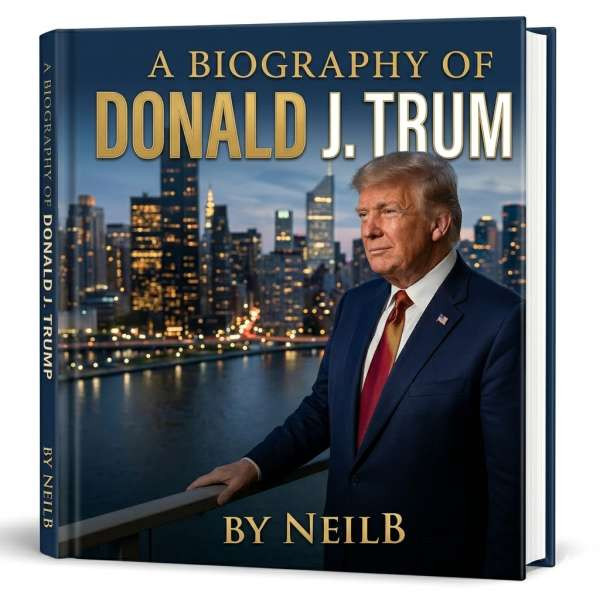
A Biography of Donald J. Trump
The Architect of the Brand:
Chapter 1: The Foundations of Queens
Born on June 14, 1946, in the borough of Queens, New York, Donald John Trump was the fourth of five children born to Fred and Mary Anne Trump. His father, a formidable real estate developer who built thousands of units of middle-class housing throughout Brooklyn and Queens, was a man of intense discipline and competitive drive. Fred Trump viewed business as a zero-sum game, a philosophy he instilled in his children from an early age. Growing up in the affluent neighborhood of Jamaica Estates, Donald was exposed to the gritty realities of construction and property management long before he entered the workforce. He spent his youth shadowing his father on job sites, learning the granular details of managing labor, negotiating contracts, and navigating the often-opaque world of New York City municipal politics. These formative years fostered in Donald a lifelong obsession with the aesthetics of success and a firm belief that power was something to be seized, not requested.
Chapter 2: New York Military Academy
By the age of thirteen, Donald’s propensity for testing boundaries and his high-octane energy prompted his father to enroll him in the New York Military Academy (NYMA), a private boarding school in Cornwall-on-Hudson. The transition from the relative comfort of home to the austere, regimented life of a cadet was designed to instill discipline and foster a sense of command. Under the mentorship of instructors like Theodore Dobias—a figure who demanded absolute conformity—Trump learned how to navigate a hierarchy through physical and social toughness. He was forced to channel his natural aggression into structured competition, eventually rising to the rank of captain. The academy served as a crucible; it was here that he began to refine the projection of strength and the charismatic confidence that would later define his public persona, understanding early on that perception often carried as much weight as reality.
Chapter 3: Fordham and Wharton
After graduating from NYMA in 1964, Trump matriculated at Fordham University in the Bronx, where he spent two years studying economics. Seeking a more prestigious environment, he transferred to the Wharton School of Finance and Commerce at the University of Pennsylvania in 1966. While at Wharton, he balanced his academic requirements with his growing ambition to look beyond his father’s outer-borough focus. His time in college coincided with the height of the Vietnam War; by leveraging medical exemptions—specifically citing bone spurs—along with his student status, he successfully deferred military service. During these years, he began his own initial real estate investments, testing the waters in the Philadelphia market and absorbing the high-finance lessons that would propel him into the Manhattan real estate arena shortly after his 1968 graduation.
Chapter 4: Entering the Family Business
Upon joining the family firm, then known as "Elizabeth Trump & Son," Donald immediately set out to modernize its operations and expand its reach. While his father was comfortable with the consistent, if modest, returns of middle-class residential development, Donald saw the untapped potential of a massive, consolidated real estate empire. By 1971, he had effectively taken control of the company, rebranding it as the "Trump Organization." This transition was marked by a shift in strategy: he sought to move from the suburbs of Brooklyn and Queens into the high-stakes, high-visibility world of Manhattan. This early period was not without significant conflict; by 1973, his aggressive management style and business practices were thrust into the national spotlight when the U.S. Department of Justice filed a landmark lawsuit alleging discriminatory rental practices against Black applicants. Though the company settled the suit without an admission of guilt, the episode served as an early introduction to the legal battles and public scrutiny that would become a constant feature of his career.
Chapter 5: The Manhattan Vision
In the mid-1970s, Manhattan represented the pinnacle of prestige, and Donald Trump was determined to leave his mark on its skyline. Ignoring the skepticism of established New York dynasties who viewed him as an inexperienced upstart, he began to target distressed properties that others had dismissed as failures. His strategy relied on a blend of charm, political maneuvering, and a keen eye for branding. He sought out the types of projects that required complex public-private partnerships, leveraging his father’s reputation and his own burgeoning network of contacts to secure rare tax abatements and government cooperation. This chapter of his life was defined by the transition from being a builder of housing to a shaper of urban identity, setting the stage for the bold, signature developments—such as the Grand Hyatt—that would eventually vault him into the stratosphere of American celebrity.
Chapter 6: The Grand Hyatt and the Revitalization of MidtownIn 1976, Donald Trump embarked on a project that would serve as his first major breakthrough in Manhattan: the conversion of the crumbling Commodore Hotel into the Grand Hyatt. The hotel was located adjacent to the derelict Grand Central Terminal, an area many developers considered a lost cause. Leveraging his growing reputation and a relentless negotiation style, Trump secured a historic agreement with New York City: a 40-year tax abatement, the first of its kind ever granted to a commercial property. This public-private partnership not only provided the necessary financing but also signaled to the city’s power brokers that the young developer was a force to be reckoned with. The renovation transformed the hotel’s dowdy brick facade into a modern vision of mirrored glass and stainless steel—a look that would become the trademark of the Trump brand. When the doors opened in 1980, the project was hailed as a catalyst for the turnaround of the Grand Central area, proving that Trump could turn urban blight into high-value real estate.
Chapter 7:
Towering Ambition Following the success of the Grand Hyatt, Trump set his sights on the most prestigious retail address in the world: Fifth Avenue. He acquired the site previously occupied by the Bonwit Teller department store, a move that sparked initial controversy due to the destruction of the store’s historic architectural features. However, Trump’s ambition for the site was absolute. He envisioned a 58-story mixed-use skyscraper that would serve as the ultimate symbol of his brand. Completed in 1983, Trump Tower was a feat of architectural boldness, featuring a jagged 28-sided facade designed to maximize the number of corner rooms. The building’s interior atrium, complete with an artificial waterfall and luxury retail space, became an immediate sensation. It was not merely an office and residential building; it was a destination that cemented Trump's status as a billionaire mogul and created the "Trump" name as a permanent fixture of the New York City skyline.
Chapter 8: The Atlantic City GambleIn the early 1980s, with his Manhattan empire established, Trump turned his attention to the neon-lit boardwalk of Atlantic City. After New Jersey legalized gambling in 1978, the city became a magnet for developers looking to replicate the success of Las Vegas on the East Coast. Trump moved aggressively, acquiring properties and eventually opening Trump Plaza in 1984. The casino operated in a fiercely competitive environment, and early struggles—including a difficult partnership with Harrah’s—led Trump to buy out his partners to maintain total control. He treated the city like a giant Monopoly board, hungrily acquiring land and competing with rival developers. This era was characterized by a predatory and high-stakes approach, as Trump sought to dominate the gambling market through sheer force of will and massive capital investment.
Chapter 9: The Rise of the Taj Mahal The crowning achievement of Trump’s casino era was the Trump Taj Mahal, an $800-million behemoth that he marketed as the "Eighth Wonder of the World." Acquired through a series of complex corporate maneuvers and opened in 1990, the Taj Mahal was designed to be the largest, most extravagant casino in the world. Its grand opening, attended by celebrities like Michael Jackson, was a spectacle of excess. However, the project was financed largely through high-interest junk bonds, and the massive debt load made the casino extraordinarily vulnerable to even minor fluctuations in revenue. While the Taj Mahal was a cultural phenomenon that drew thousands of visitors, it was also a financial house of cards. The project’s sheer scale and the aggressive reliance on debt served as a precursor to the systemic financial crises that would soon envelop the broader Trump Organization.
Chapter 10: The 1990s Financial Crisis and RestructuringBy 1990, the over-leveraged nature of Trump’s empire began to unravel. The combination of high interest rates, the cooling of the real estate market, and the massive debt burden of his Atlantic City casinos pushed the Trump Organization to the brink of total collapse. With nearly $3 billion in debt and personal guarantees at risk, Trump found himself locked in a desperate battle with his own lenders. He avoided a total liquidation by negotiating a series of complex restructuring deals. He was forced to sell assets—including his airline and his yacht—and relinquish significant equity in his hotels and casinos. Despite the severity of the crisis, Trump managed to hold onto the core of his brand. This period was a brutal lesson in financial risk, yet it solidified his reputation as a survivor; he had faced the end of his empire and emerged, albeit with a reduced footprint, still in control of his name and his future.
Chapter 11: Survival and Brand Licensing Following the financial brinkmanship of the early 1990s, Trump pivoted his business model away from the capital-intensive and debt-heavy risks of direct ownership. Instead, he pioneered a high-margin, low-risk strategy centered on licensing his surname. He began branding luxury consumer goods, from steaks and vodka to home furnishings and real estate developments owned by third-party developers. This shift allowed him to leverage the "Trump" brand—which he had spent decades cultivating—without the exposure of carrying the massive debt associated with building projects from scratch. It was a transformation that saw him evolve from a developer into a global brand ambassador for luxury, ensuring that his name remained synonymous with wealth even as his direct control over physical assets fluctuated.
Chapter 12: The Art of the ComebackIn 1997, Trump published The Art of the Comeback, a book that reflected his evolution from the near-bankruptcy of the early 90s to his renewed stability. This period was crucial in reestablishing his public image. He moved beyond just business, inserting himself into the cultural conversation through tabloid appearances and a mastery of media manipulation. He understood that the American public was drawn to narratives of resilience; by framing his financial recovery as a personal victory against the "establishment" and the skeptics who had predicted his downfall, he turned a period of professional weakness into a testament to his toughness. He was no longer just a New York real estate developer; he was a character in the public consciousness.
Chapter 13: The Apprentice and Media Stardom In 2004, producer Mark Burnett approached Trump with an offer to star in a reality television show, The Apprentice. Though Trump initially doubted the appeal of the format, he agreed to appear as the boardroom authority figure who would decide the fate of aspiring professionals. The show became an instant cultural phenomenon, re-branding him for a national audience as the ultimate decisive leader. To millions, he was the mentor who could identify talent and ruthlessly excise those who failed to deliver. The show generated massive personal income, solidified his global name recognition, and provided a platform to refine the authoritative, "You're fired" persona that would later become a hallmark of his political communication.
Chapter 14: Golf Courses and Global Expansion By the mid-2000s, the Trump Organization shifted focus toward a massive portfolio of luxury golf courses. From Bedminster in New Jersey to Turnberry in Scotland, these clubs were designed as exclusive sanctuaries for the global elite. Each course was more than a sports venue; it was an extension of the brand, designed to serve as a hub for the wealthy and the powerful. This strategy successfully diversified the organization's assets and provided a steady, exclusive revenue stream that was largely independent of the broader real estate market's volatility. It was the final step in his transition from a city-focused builder to a global tycoon with a footprint on multiple continents
Chapter 15: Political Foundations and the Birther MovementAs his media profile reached its zenith, Trump began to experiment with political messaging. In the early 2010s, he emerged as a leading voice in the "Birther" movement, questioning the legitimacy of President Barack Obama’s birthplace. While the narrative was rejected by fact-checkers and political elites, it proved highly effective in galvanizing a specific segment of the American electorate. This period marked his first true "outsider" political campaign, teaching him that challenging established institutions and traditional media narratives could generate intense grassroots loyalty and media attention that money could not buy. It was the initial spark of the populist fire that would define his future political career.
Chapter 16: The 2015 Campaign LaunchOn June 16, 2015, Donald Trump descended the golden escalator at Trump Tower in New York City, launching a presidential campaign that would defy every conventional political expectation. His announcement speech was a defining moment in modern American politics. He characterized the country as a nation in decline, beset by unsecured borders, failing trade deals, and a political class that was "all talk and no action." By framing himself as a "bold and independent" outsider with a track record of building complex organizations, he tapped into a deep well of voter frustration. His pledge to "Make America Great Again"—a slogan that would soon be symbolized by the iconic red "MAGA" cap—offered a populist vision of economic nationalism and a return to national strength.
Chapter 17: The Primary Battles and the Republican Nomination Trump’s primary campaign was a masterclass in media disruption. Eschewing the traditional reliance on expensive ground games and establishment endorsements, he utilized a combative, unscripted communication style that dominated social media and cable news cycles. He famously deployed blunt, often insulting monikers for his rivals, such as "Little Marco" for Senator Marco Rubio and "Lyin' Ted" for Senator Ted Cruz, effectively neutralizing their attempts to attack him on policy grounds. Despite early skepticism from party strategists, his focus on illegal immigration, trade protectionism, and opposition to "political correctness" resonated strongly with blue-collar, working-class voters. By the time he won the Indiana primary in May 2016, his remaining opponents had dropped out, and he was officially the Republican nominee.
Chapter 18: The 2016 General Election The general election race between Donald Trump and former Secretary of State Hillary Clinton was one of the most contentious in American history. While polling consistently favored Clinton, Trump’s appeal in the Rust Belt—specifically in states like Pennsylvania, Michigan, and Wisconsin—provided the decisive electoral edge. He campaigned as a candidate for the "forgotten" American, focusing on the decay of the manufacturing sector and the need for stricter immigration enforcement. Despite facing numerous controversies, including the release of the Access Hollywood tape and the fallout from the Russian interference investigation, he maintained a solid base of support. On November 8, 2016, in an outcome that stunned the political establishment, Trump won a decisive victory in the Electoral College, becoming the 45th President of the United States.
Chapter 19: The First Transition and Early Cabinet The transition period between Trump’s victory and his January 20, 2017 inauguration was marked by an aggressive effort to assemble an administration that would dismantle the status quo. He selected a cabinet that included both traditional Republican stalwarts and outsiders who shared his vision for a leaner, more nationalist government. Upon taking office, his first 100 days were defined by a flurry of executive orders aimed at rolling back regulations from the Obama era, including actions on the Affordable Care Act and environmental policies. He prioritized a "hiring freeze" on federal workers and emphasized an "America First" trade policy, signaling that the traditional norms of Washington would be secondary to his goal of fundamental administrative change.
Chapter 20: The First Term: Economic Policy and Deregulation President Trump’s economic agenda centered on the belief that a deregulated, low-tax environment would unleash American prosperity. The signature legislative achievement of his first term was the Tax Cuts and Jobs Act of 2017, which slashed the corporate tax rate from 35% to 21% and provided significant tax relief to middle-class families. Beyond taxes, his administration aggressively pursued deregulation, aiming to remove bureaucratic hurdles for businesses in sectors ranging from energy to infrastructure. By streamlining approval processes for major projects and eliminating "Waters of the United States" rules, he sought to restore investment confidence and spur a massive surge in private-sector job creation,
Chapter 21: The First Term: Foreign Policy and Trade President Trump’s foreign policy was defined by the "America First" doctrine, which prioritized national sovereignty and a rebalancing of international alliances. He famously withdrew the United States from the Trans-Pacific Partnership (TPP) and the Iran nuclear deal, arguing that these agreements disadvantaged American workers and undermined national security interests. His trade policy was aggressively protectionist, utilizing tariffs against China and other nations to address trade deficits and protect domestic manufacturing. This era also saw a push for NATO allies to increase their defense spending, as Trump pressured European leaders to shoulder more of the financial burden for their own security
Chapter 22: Impeachments and InvestigationsThe first term was marked by intense scrutiny and legal challenges. In May 2017, the Department of Justice appointed Robert Mueller as Special Counsel to investigate Russian interference in the 2016 election and potential coordination with the Trump campaign. This investigation culminated in the 2019 Mueller Report, which detailed numerous contacts between the campaign and Russian figures but stopped short of concluding a criminal conspiracy. Shortly after, the House of Representatives initiated the first of two impeachments, charging the President with abuse of power and obstruction of Congress regarding interactions with Ukraine. Trump was acquitted by the Senate in both this trial and his second impeachment trial in 2021, which followed the events of January 6.
Chapter 23: The Global Pandemic and 2020The final year of his first term was dominated by the COVID-19 pandemic, which caused massive economic disruption and a public health crisis. The administration’s response included the passage of the CARES Act, a $2.2 trillion relief package designed to mitigate the economic fallout. Despite these measures, the pandemic became a central issue in the 2020 presidential election. The campaign season was heavily altered by social distancing protocols, leading to a massive expansion of mail-in voting. Trump was ultimately defeated by Joe Biden, though he continued to challenge the validity of the election results, culminating in the events at the U.S. Capitol on January 6, 2021.Chapter 24: Exile, Legal Battles, and the GOP InfluenceFollowing the end of his first term, Trump relocated to Mar-a-Lago in Florida, maintaining his status as the de facto leader of the Republican Party. Despite facing multiple civil and criminal indictments—including a 2024 conviction in New York regarding business records—he exerted significant influence over the GOP primary process. His "MAGA" movement remained the dominant force within the party, as he campaigned on a platform of grievance, economic nationalism, and a promise to restore the nation’s status. This period proved that his political base was remarkably resilient to legal pressures and external criticism.
Chapter 25: The 2024 Return to the White HouseThe 2024 presidential campaign saw Donald Trump return to the political arena, eventually defeating Vice President Kamala Harris to win a non-consecutive second term. His victory was solidified by a stronger-than-expected performance across key swing states and a coalition that included significant gains among Hispanic and younger male voters. On January 20, 2025, he was inaugurated as the 47th President of the United States. His second term began with an immediate push to enact his "America First" agenda, including sweeping executive orders on border security and a significant overhaul of federal economic policy. particularly in construction and manufacturing.
Recently Listened by


No comments found
More books