- 1
- 1
- 0
- 0
- 0


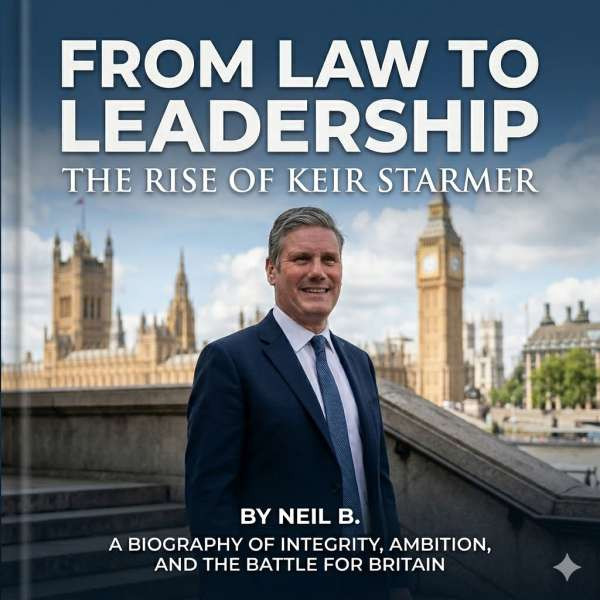
Biography of Sir Keir Starmer
Keir Rodney Starmer was born on September 2, 1962, in the bustling district of Southwark, London. His family history is deeply rooted in the working-class traditions of Britain. He was named after Keir Hardie, the pioneering founder of the Labour Party, a moniker that seemed to foreshadow his future path. His father, Rodney, was a toolmaker, a profession that demanded precision and patience, while his mother, Jo, worked as a nurse in the National Health Service. The family eventually moved to Oxted, Surrey, where Keir grew up in a semi-detached home. This upbringing was modest, marked by a quiet, industrious atmosphere. It was here that he learned the value of hard work, a principle that would guide him through the grueling years of his legal and political career.
Keir Rodney Starmer was born on September 2, 1962, in the bustling district of Southwark, London. His family history is deeply rooted in the working-class traditions of Britain. He was named after Keir Hardie, the pioneering founder of the Labour Party, a moniker that seemed to foreshadow his future path. His father, Rodney, was a toolmaker, a profession that demanded precision and patience, while his mother, Jo, worked as a nurse in the National Health Service. The family eventually moved to Oxted, Surrey, where Keir grew up in a semi-detached home. This upbringing was modest, marked by a quiet, industrious atmosphere. It was here that he learned the value of hard work, a principle that would guide him through the grueling years of his legal and political career.
Biography of Sir Keir Starmer
Chapter 1: The Foundations of a Life
Keir Rodney Starmer was born on September 2, 1962, in the bustling district of Southwark, London. His family history is deeply rooted in the working-class traditions of Britain. He was named after Keir Hardie, the pioneering founder of the Labour Party, a moniker that seemed to foreshadow his future path. His father, Rodney, was a toolmaker, a profession that demanded precision and patience, while his mother, Jo, worked as a nurse in the National Health Service. The family eventually moved to Oxted, Surrey, where Keir grew up in a semi-detached home. This upbringing was modest, marked by a quiet, industrious atmosphere. It was here that he learned the value of hard work, a principle that would guide him through the grueling years of his legal and political career.
Chapter 2: Academic Ambition
Keir’s educational journey was a path of steady, focused achievement. At Reigate Grammar School, he displayed a sharp intellect and a penchant for discipline. He became the first member of his family to pursue higher education, a milestone that his parents encouraged with great pride. He enrolled at the University of Leeds to study law, a choice driven by his growing interest in how societal rules govern justice. His time in Leeds was spent honing his analytical skills and deepening his understanding of the intersection between law and social equity. After graduating, he moved on to St Edmund Hall, Oxford, for his postgraduate studies, further refining his legal acumen and preparing for the intense demands of the British legal system.
Chapter 3: The Bar and the Battle for Rights
Called to the Bar in 1987, Starmer entered the legal profession during a time of significant social change. He joined Doughty Street Chambers, a firm known for its commitment to human rights and civil liberties. As a young barrister, he did not just take cases to earn a living; he took them to fight for those who had been marginalized by the state or powerful entities. He earned a reputation as a meticulous and formidable advocate. Whether representing protesters or individuals challenging government decisions, his courtroom style was defined by calm authority and an unwavering focus on the facts. He was often sought out for his ability to synthesize complex information into clear, persuasive arguments.
Chapter 4: The McLibel Trial
One of the most defining moments of Starmer's early career was his involvement in the famous McLibel case. Representing David Morris and Helen Steel pro bono, he took on the corporate giant McDonald’s in a legal battle that lasted years. The case was a David-versus-Goliath struggle that brought issues of corporate power, free speech, and environmental ethics into the national spotlight. Although the litigation was exhausting, it showcased Starmer's resilience and his willingness to tackle cases that many other lawyers would have avoided due to the immense resources of the opposing side. The experience reinforced his belief that the law should be a tool for the common person, not just a mechanism for the wealthy.
Chapter 5: Rising to the Prosecution
In 2008, a significant shift occurred in Starmer's career when he was appointed Director of Public Prosecutions (DPP) and Head of the Crown Prosecution Service (CPS). This move was surprising to some, as he had spent his career defending individuals against the state. However, Starmer saw it as an opportunity to change the system from within. As DPP, he was responsible for overseeing some of the most complex criminal prosecutions in the country. He implemented reforms aimed at improving the efficiency of the justice system and ensuring that victims of crime felt supported throughout the legal process. His tenure at the CPS was characterized by an attempt to modernize the institution and bring greater transparency to criminal justice.
Chapter 6: The Weight of Responsibility
The role of DPP brought Starmer face-to-face with the harsh realities of criminal activity in the digital age. He had to navigate high-stakes decisions involving counter-terrorism, political corruption, and the evolving nature of digital crime. His calm demeanor under pressure became his hallmark. He insisted on a rigorous, evidence-based approach to every case, refusing to bow to media pressure or political influence. For his dedication to the law and his efforts to reform the criminal justice system, he was knighted in 2014, a recognition that solidified his status as one of the most respected legal minds in the United Kingdom.
Chapter 7: Entering the Political Arena
The transition from the courtroom to the House of Commons is rarely easy, but Starmer viewed it as the natural progression of his public service career. In 2015, he was elected as the Member of Parliament for Holborn and St Pancras. His entry into politics was marked by immediate attention from his peers and the media. He brought with him the habits of a barrister: extreme preparation, forensic attention to detail, and a focus on procedural fairness. His colleagues in the Labour Party quickly noted his potential, and he was soon fast-tracked into the Shadow Cabinet, where he would be tested on the biggest political stage in the country.
Chapter 8: The Shadow Cabinet and Brexit
Starmer’s appointment as Shadow Secretary of State for Exiting the European Union placed him at the center of the most contentious political issue of the decade. Following the 2016 referendum, the UK was thrust into a period of extreme uncertainty. Starmer had to hold the government to account while the Labour Party itself struggled to define a clear stance. He worked tirelessly to analyze the technicalities of the Brexit negotiations, constantly challenging the government to be more transparent about the implications of leaving the EU. His grasp of the complexities involved in international trade and law made him a persistent thorn in the side of Conservative ministers.
Chapter 9: The Call for a Second Referendum
As the Brexit negotiations dragged on, Starmer emerged as one of the most vocal proponents for a second referendum, often referred to as a "People's Vote." He argued that the public should have the final say once the details of the withdrawal agreement were clear. This position put him at odds with some segments of the Labour Party’s base, but he remained convinced that it was the most democratic path forward. His willingness to take a firm stance on such a divisive issue marked him as a leader who was prepared to make difficult choices, even when they were unpopular with parts of his own party.
Chapter 10: The 2019 Election Defeat
The 2019 general election was a watershed moment for the Labour Party. The result was a devastating defeat, leaving the party with its fewest seats since the 1930s. The failure was a collective shock to the party, leading to a period of intense soul-searching. Starmer, who had managed to retain his seat, saw the wreckage not as the end, but as a starting point for necessary renewal. He recognized that the party had lost the trust of the very people it was intended to serve, and he began to formulate a vision for what a transformed, modernized Labour Party could look like.
Chapter 11: The Leadership Campaign
In the wake of the 2019 disaster, Jeremy Corbyn stepped down, and a leadership contest ensued. Starmer campaigned on a platform of unity, competence, and professionalism. He distanced himself from the more extreme elements that had defined the previous years, instead focusing on the need for Labour to be a government-in-waiting. He promised to restore the party’s reputation for economic responsibility and to reach out to the traditional working-class voters who had abandoned the party. His message resonated with members who were tired of factionalism and hungry for a path back to power.
Chapter 12: Leading Through the Pandemic
In April 2020, Keir Starmer was elected Leader of the Labour Party. He took on the role just as the COVID-19 pandemic began to tear through the country. It was an unprecedented challenge for any leader, let alone one just starting out. With the nation in lockdown and public attention laser-focused on the government’s response, Starmer had to find a way to lead from the opposition. He adopted a policy of "constructive opposition," supporting the government when he believed it was in the national interest, but criticizing it sharply when he felt the handling of the pandemic was incompetent or dangerous.
Chapter 13: A Forensic Approach to Opposition
Starmer’s background as a prosecutor defined his performance at the dispatch box. During Prime Minister’s Questions, he moved away from the performative shouting matches that often characterized the sessions. Instead, he employed a forensic style, asking precise questions and waiting for answers that never came. He used data and expert testimony to highlight gaps in the government’s pandemic planning, such as the care home crisis and the procurement of personal protective equipment. This approach began to shift public perception, as voters started to see him as a more reliable and serious alternative to the incumbent administration.
Chapter 14: The Rebuilding of the Labour Party
Behind the scenes, Starmer was engaged in a relentless effort to change the party’s culture. He tackled issues of internal discipline and sought to ensure that the party’s policies were grounded in economic reality. He knew that to win a general election, he had to prove that Labour could be trusted with the nation’s finances. He slowly stripped away the policies that had made the party unelectable in 2019, replacing them with a focus on "mission-led" government. This shift was not without resistance, but Starmer remained disciplined, constantly keeping his eyes on the goal of winning back the trust of the electorate.
Chapter 15: The Road to 2024
The years between 2020 and 2024 were a slow, methodical march toward the general election. Starmer traveled across the country, listening to voters who had felt ignored by Westminster for years. He built a team of advisors and frontbenchers who shared his vision of a "changed Labour Party." He focused on key areas: rebuilding the National Health Service, driving economic growth, and addressing the crime and anti-social behavior that plagued many communities. The campaign was not built on slogans, but on a narrative of national renewal and stability after years of political chaos.
Chapter 16: The Campaign trail
The official campaign for the 2024 general election saw a disciplined and focused Starmer. He avoided the common traps of previous campaigns, such as making unrealistic spending promises. Instead, he presented himself as a steady hand on the tiller. He highlighted the fatigue that the public felt after years of Conservative leadership, characterizing the choice as one between more of the same instability or a clean slate with a government focused on delivery. His constant presence in swing seats and his calm, reassuring tone helped to maintain a consistent lead in the polls throughout the duration of the campaign.
Chapter 17: A Landslide Victory
On July 4, 2024, the polls closed and the exit poll indicated a massive shift in the political tide. As the results rolled in, it became clear that the Labour Party had achieved a landslide victory. Across the country, voters had opted for a change in direction. For Starmer, it was the culmination of years of hard work, discipline, and strategic positioning. When he finally stood on the steps of Downing Street to deliver his first address as Prime Minister, he acknowledged the magnitude of the task ahead and the heavy responsibility that now rested on his shoulders.
Chapter 18: Stepping into the Premier’s Office
The first few days at 10 Downing Street were a blur of briefings, cabinet appointments, and urgent policy decisions. Starmer inherited a country facing a multitude of problems, from an economy struggling with inflation to a public sector that was crying out for reform. His immediate priority was to establish a professional, efficient tone in government. He tasked his ministers with hitting the ground running, demanding that every policy be evidence-based and clearly linked to the goals he had set out during the campaign. The focus was on moving from opposition to delivery, showing the public that change was actually happening.
Chapter 19: The Challenges of Governance
Governance, as Starmer quickly learned, is far more complex than campaigning. The realities of international relations, economic constraints, and bureaucratic inertia presented constant hurdles. He faced criticism from those who felt that the changes were not happening fast enough, as well as from those who were worried about the costs of his proposed reforms. Throughout these early tests, Starmer remained steady. He viewed these challenges not as roadblocks, but as the inevitable reality of running a country. He continued to rely on his methodical, prosecutor-like approach to problem-solving, breaking down large, systemic issues into smaller, manageable parts.
Chapter 20: The Unfolding Legacy
As of 2026, Sir Keir Starmer’s premiership continues to be a work in progress. His journey, from a toolmaker’s son in Surrey to the head of the British government, is a narrative of persistence and quiet ambition. He has succeeded in bringing the Labour Party back to the center of British politics and securing a mandate to govern. Whether he will be remembered as the leader who successfully navigated Britain through a period of profound transition, or as a transitional figure in a larger historical shift, remains to be seen. The pages of his biography are still being written, with the challenges of the future set to define the final shape of his legacy.
Недавно прослушал


Комментариев не найдено
Больше треков